In an attached home in California, the rules that govern how you can use your space are written down before you buy. For a condo or townhome in Irvine, a set of governing documents, the CC&Rs, the bylaws, and the association's operating rules, controls rentals, pets, and most changes to the exterior and interior. A buyer who does not read them can discover an unexpected limitation after closing. This guide explains what California law guarantees every common-interest owner, where the association's discretion legitimately begins, and what Irvine attached-home buyers should check before an offer.
Every rule cited below comes from the Davis-Stirling Common Interest Development Act, which governs California shared-interest communities under Civil Code section 4000 and following, and every source has an access date of November 25, 2026. None of this is legal advice, and each association's own recorded documents are the final word for that community. The point of this article is to map the legal boundaries so a buyer knows which rules an HOA can write and which ones California law protects an owner against.
The one-line summary
California law sets a floor for every common-interest owner: at least one pet must generally be allowed (Civil Code 4715), rental restrictions that arrive after you buy generally cannot be forced on you (Civil Code 4740), and the exterior of a building in an attached development is common area, so changes like paint, windows, and doors run through association approval under a fair and written procedure (Civil Code 4765). Everything else, the number of pets, lease terms, architectural rules, and the monthly dues that fund shared amenities, lives in the governing documents you receive in the resale package. Reading those documents is the single most useful step an Irvine attached-home buyer can take.
Why governing documents matter for Irvine buyers
California's common-interest developments, the legal name for communities with a homeowners or condominium association, are organized under the Davis-Stirling Act, Civil Code section 4000 and following. The governing documents sit in a hierarchy: the CC&Rs (covenants, conditions, and restrictions), which are recorded against the property and run with it; the bylaws and the articles of incorporation, which structure the association; and the operating rules, which the board adopts to cover day-to-day use. The California Department of Real Estate specifically flags common interest developments as a category that needs special care from an agent and careful reading by a buyer, because more of the lifestyle and the cost of ownership is bound up in these documents than in a detached-home purchase.
Irvine makes this especially true. Nearly all residential property in the city sits inside at least one association, and many homes lie within both a master association and a sub-association, each with its own documents and its own fee. In this property's own setting, the listing data references two layers, the Doe Trail Condo Association and the Deerfield Community Association, which this article returns to below. The practical effect is that the answer to almost every "can I" question in an Irvine attached home is a document question: the recorded CC&Rs and the current operating rules tell you, and the law tells you which parts of those rules you are protected against.
Rental restrictions: what Civil Code 4740 protects
Rental restrictions are common in Irvine, and the state rules that govern them are precise. Civil Code section 4740 states that an owner may not be subjected to a governing-document provision or amendment that prohibits renting or leasing their separate interest unless that provision was already in effect when the owner acquired title. In practical terms, the rental environment is frozen on the day you buy: a rental ban the association adopts later generally cannot be applied to you, though it can apply to a future owner who buys after the change. This is the single most important principle for a buyer to understand, because it means the rental rules that matter are the ones recorded at your purchase date, not the ones that might be easiest to read about later.
Two related protections round out the picture. First, Civil Code section 4739, added by AB 1410 and effective in 2023, says an owner who occupies their own separate interest cannot be barred from renting out a portion of it, for example a room, for more than 30 days, provided the owner continues to occupy the unit and both the owner and the tenant follow the association's reasonable common-area rules. Second, Irvine itself restricts short-term rentals: the city prohibits residential rentals of fewer than 30 days, so platforms that cater to one- or two-week stays are off the table citywide regardless of what any single association says. Many Irvine associations go further than the state floor, capping the share of units that may be rented, requiring minimum lease terms, or banning short-term lets entirely, so the directory of allowed uses in your specific community is a real due-diligence item.
For a buyer who plans to rent the home out, or who wants the option, the disciplined move is to read the current rental provisions in the CC&Rs and any recent board resolutions, and to ask whether a rental cap or waitlist exists. For a buyer who could never imagine renting, the same lines matter in reverse: an owner-occupant who later wants flexibility values knowing the state floor protects them from a mid-ownership ban. Both buyers should see the documents, because the recorded rules are what a lender, an insurer, or a future buyer will also read.
Pet rules: the one-pet floor and what is fair
California law sets a clear floor for pets. Civil Code section 4715 provides that no governing document may prohibit an owner from keeping at least one pet in the development, subject to the association's reasonable rules and regulations. "Pet" in the statute means any domesticated bird, cat, dog, aquatic animal kept in an aquarium, or other animal agreed to between the association and the owner. The protection is a floor, not a ceiling: an association may adopt reasonable rules on the number of pets beyond one, on size and animal type, and on conduct such as waste cleanup, noise, and leashing, as long as those rules still permit the one-pet minimum.
Two distinctions matter in practice. First, assistance and service animals are governed separately under fair-housing law, and an HOA generally cannot bar them the way it can restrict a companion pet, so someone with a documented need has different rights than a pet owner in the ordinary sense. Second, because the one-pet floor is a statute, an aggressive restriction that effectively bars all pets is legally vulnerable, but the number, size, and type limits a community writes into its rules are usually enforceable and vary widely across Irvine. A buyer whose home life revolves around two large dogs should verify the pet policy of the specific association, because the state floor does not guarantee two, and it does not guarantee any particular size.
Architectural changes: what needs board approval
The defining feature of an attached home is that its exterior is shared. In a condominium or townhome building, the walls, windows, doors, roofing, and other exterior elements are typically common area owned or maintained by the association, so any change to them is a physical change to common area and requires association approval under the CC&Rs. Civil Code section 4765 requires the association, where its documents require approval for a physical change, to provide a fair, reasonable, and expeditious procedure with prompt deadlines, to decide in good faith and not unreasonably, arbitrarily, or capriciously, and to apply only written architectural standards that appear in the governing documents. A denial that is arbitrary or based on no written standard is generally challengeable.
Inside your own four walls the law is more liberal. Civil Code section 4760 allows a member to make improvements and alterations within the boundaries of their separate interest as long as they do not impair the structural integrity or mechanical systems of the development or lessen the support of any other part. Flooring, cabinetry, and interior finishes are usually in that zone, though decking above a neighbor, plumbing that shares a stack, and anything touching a demising wall can still bring the association in. Two statutory carve-outs deserve attention: owners may modify a unit at their own expense for disability access, and, as this journal detailed in its EV charging explainer, Civil Code 4745 gives an owner the right to install a charging station in their unit or designated parking space under a defined 60-day approval clock. Exterior changes, from paint, windows, and doors to patio structures, run through the written architectural review process, which is why a buyer eyeing a change should start by reading the architecture standards, not by asking the board.
What the dues fund: the shared community
The rules exist to protect a shared community that the dues pay for, and understanding the budget is as educational as understanding the use restrictions. In a well-run Irvine association, monthly and quarterly assessments fund the maintenance of common areas, pools, and landscaping, the master insurance policy that protects the buildings and shared structures, and the reserve account that finances future replacements of roofs, exterior elevations, and infrastructure. This journal's condo financing explainer walks through why lenders also scrutinize that budget, reserves, and owner delinquencies when deciding which loan programs a project qualifies for, and the SB 326 disclosure guide covers the exterior inspection and master-insurance picture. The share of an attached home's monthly carry that goes to assessments is material in Irvine, which is one reason the maintenance map and the property tax guide in this journal read well alongside this one.
The point for a buyer is that the CC&Rs and the budget together describe the deal. The rules tell you how the community is lived in; the budget and the reserve study tell you whether the association can keep its promises, and whether a special assessment is likely on the way. Both belong in the resale package, and both are worth an honest read before an offer rather than after it.
The resale package and the questions to ask
California's resale-package rules make the documents reachable before you commit. Under the Davis-Stirling Act, a seller must provide a resale package that includes the CC&Rs, bylaws, current rules, the association's budget and reserve study, the assessment and fee schedule, and recent board information, and the association has a short window to respond to a request. This journal covered the disclosure file itself, including the SB 326 exterior elevated element inspection report and the insurance disclosure that became part of the picture, in SB 326 and the HOA File. In Irvine, where most communities sit inside master and sub- association layers, that package can run to several documents, and reading all of them is realistic within a typical inspection period.
The questions to answer from the package go beyond the three headline rules. What are the rental provisions, including any caps, waitlists, and minimum lease terms? What are the pet limits, and do they fit your household? What is the architectural approval process, and what standards does it apply? Are there pending or recent special assessments, a low reserve balance, or a large share of owners behind on dues? What is the master insurance coverage, and what does the owner's own policy need to cover? Are there unresolved violations against the unit, pending litigation, or construction-defect claims? The California DRE's own counsel to buyers is to read these documents carefully and to consult an agent, attorney, and financial advisor before buying, and an attached home in Irvine is exactly the setting where that advice is meaningful.
What this means at 8 Silverwood
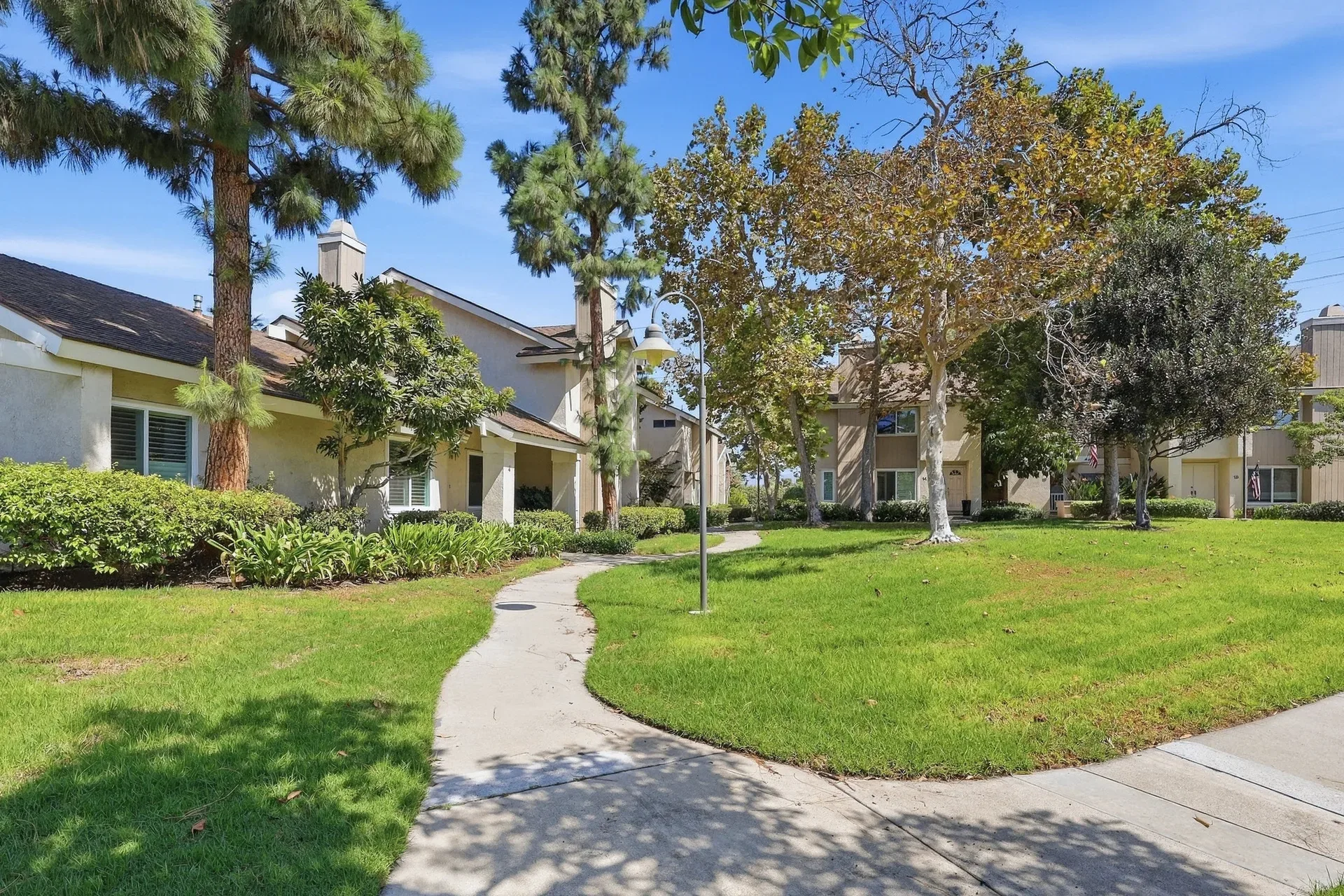
8 Silverwood sits in the Deerfield area of Woodbridge, and its listing data references two assessment layers, the Doe Trail Condo Association at approximately $582 per month and the Deerfield Community Association at approximately $351 per quarter, figures that also appear on the site's Market Intelligence page and should be independently verified. Those two numbers illustrate the point of this article: assessments are a fixed, recurring, non-negotiable part of the monthly cost, and they buy real shared value, community pools, parks, and grounds that this journal's neighborhood guide and gallery photograph. Because 8 Silverwood sits within a larger Irvine master-planned community, the governing-document stack is layered, and the resale package for the home should show both layers, the condominium association and the community association.
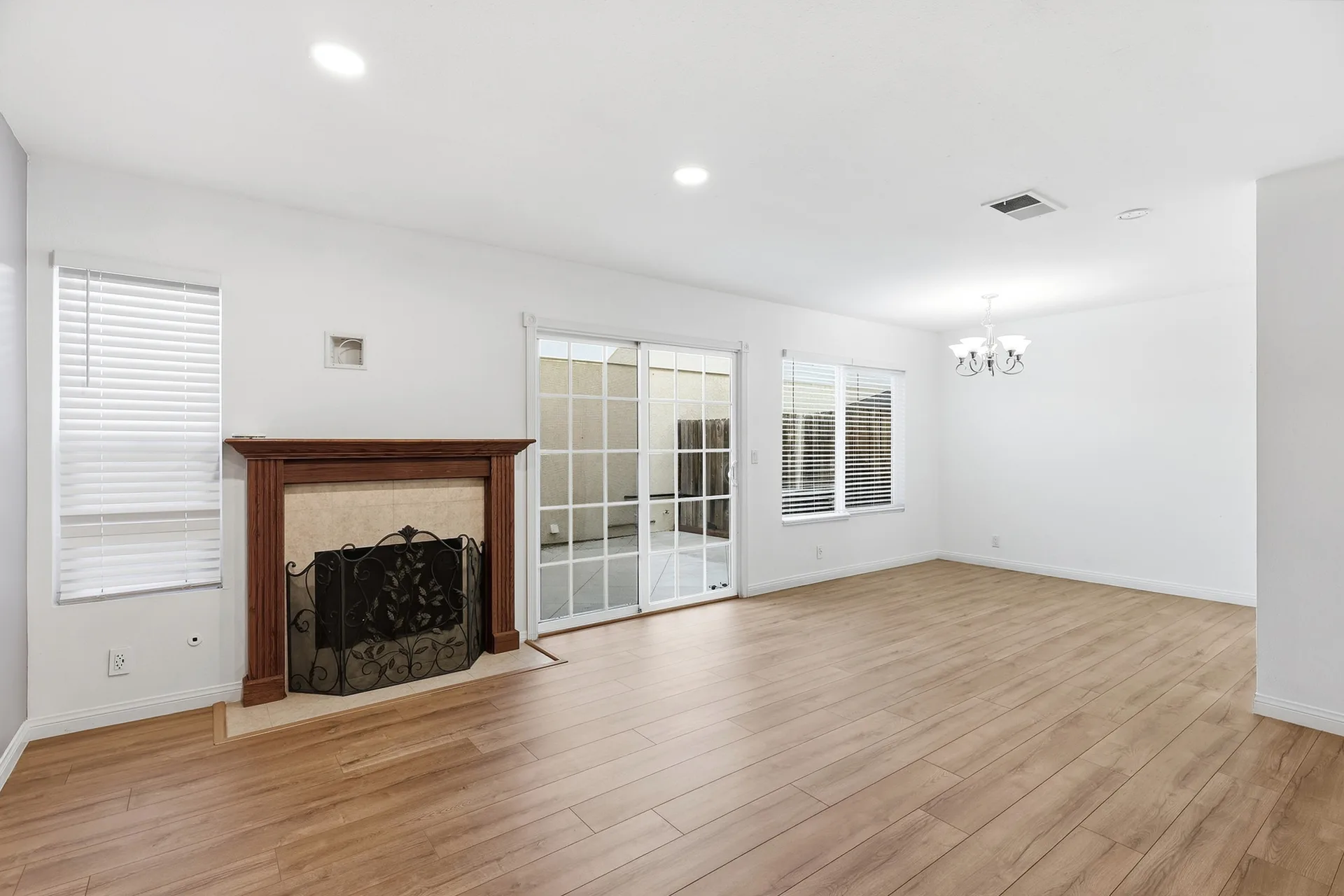
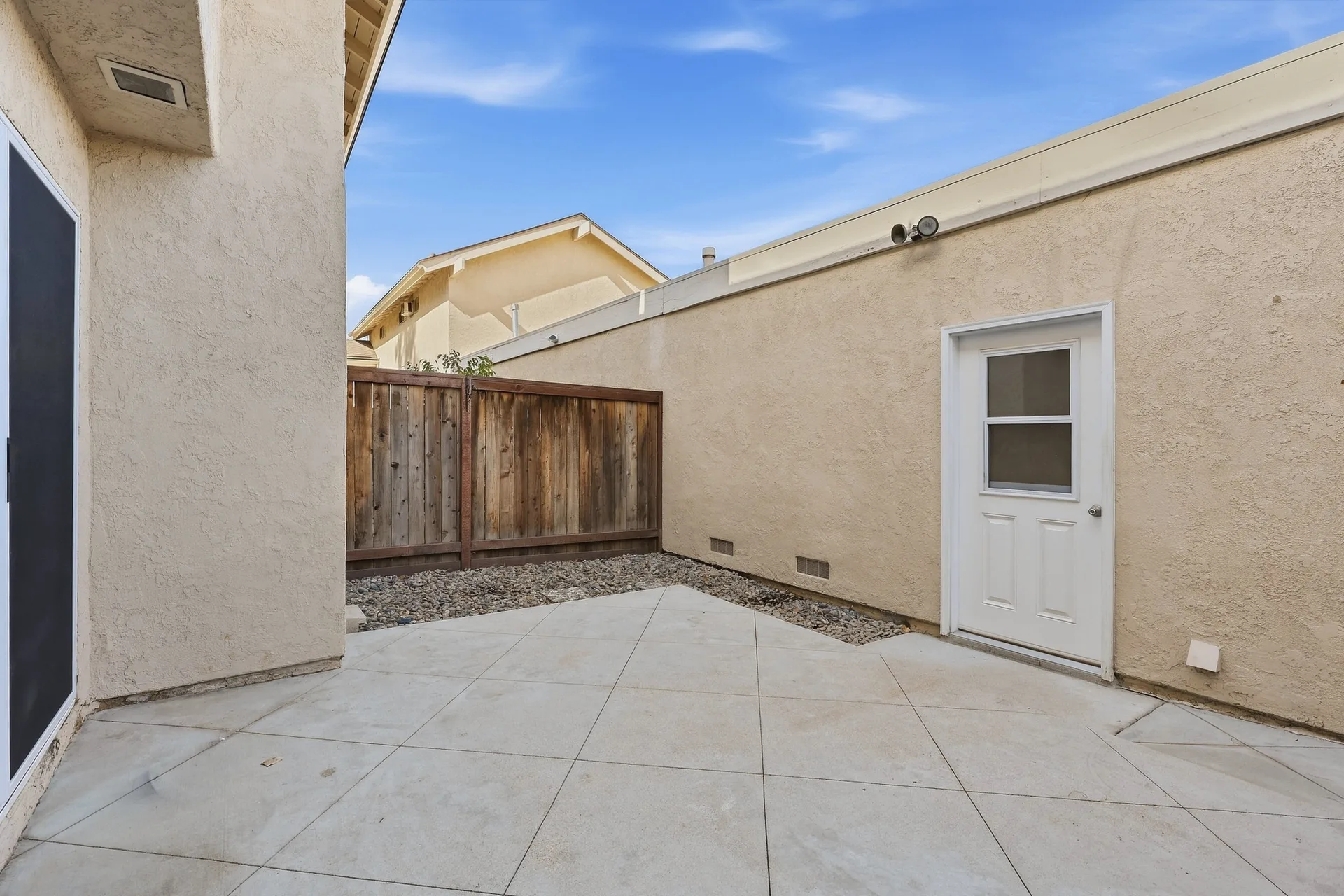
The private patio, wood-mantel fireplace, and attached garage that anchor the home's story are all interior or clearly attributable elements, but the exterior envelope and the shared grounds live in the association's world. A buyer who loves the idea of the patio and the quiet outdoor setting, which the property's own notes describe as central to how the home lives, still wants to confirm the association's rules on patio use, plantings, and any structural changes, and the same fair, written approval process described above governs them. The respectful way to buy an attached home is to treat the CC&Rs as part of the property, because in every real sense they are.
Questions to bring to your agent and the board
A focused rundown turns the resale package into a decision. The questions below are worth asking before an offer, with your agent on the reading and, where a question touches enforcement or pending action, the current board or the property manager:
- What exactly do the CC&Rs and operating rules permit for rentals, including caps, waitlists, and minimum lease terms, and does the version I am reading match what is current?
- What are the pet limits on number, size, and type, and do the assistance-animal provisions protect a documented need?
- What is the architectural approval process and its typical timeline, and what written standards does the board apply to exterior and interior changes?
- What does the master insurance policy cover, what does my own interior policy need to add, and is there an exterior inspection report in the file?
- Is a special assessment pending or recently approved, how funded is the reserve account, and what share of owners are current on dues?
- Are there unresolved violations against this unit, pending litigation, or construction-defect claims that could carry costs to a future owner?
If an answer takes more than one call to obtain, that is normal, and it is a reason to start early rather than skip the step. The buyers who walk into an Irvine attached-home purchase with the CC&Rs read are the ones who already know which home they own on move-in day.
Sources and data notes
The statutory and guidance figures in this article are drawn from the named references below, each with an access date of November 25, 2026:
- Davis-Stirling Common Interest Development Act, California Civil Code section 4000 and following, for the framework governing HOAs and condominium associations in California.
- California Civil Code section 4740, rental restrictions, including the rule that a rental prohibition adopted after an owner acquires title generally cannot be applied to that owner. California Legislative Information
- California Civil Code section 4739, added by AB 1410 (effective 2023), permitting an owner-occupant to rent a portion of their separate interest for more than 30 days subject to reasonable association rules. California Legislative Information
- California Civil Code section 4715, pet restrictions, for the one-pet floor and the definition of pet, made with reference to FindHOALaw's summary of the section. findhoalaw.com
- California Civil Code sections 4760 and 4765, modification of separate interest, for interior alterations within a unit and the requirement that architectural approval be fair, expeditious, in good faith, and based on written standards, with reference to MBK Chapman's fact sheet on architectural denials. California Legislative Information
- California Department of Real Estate, "Common Interest Developments Require Special Care by Agents," for the agency guidance that CIDs demand careful document review and professional consultation. dre.ca.gov
- Irvine short-term rental law and community HOA context, via calandlordlaws.com (citywide rentals under 30 days restricted in residential zones) and community HOA rule summaries covering Irvine associations, used as examples of how rental and pet limits vary by community. calandlordlaws.com
Data notes: statutory citations are read from the named primary and secondary sources with an access date of November 25, 2026, and each association's own recorded CC&Rs, bylaws, and operating rules are the controlling authority for that community. State-law protections such as the one-pet floor and the rental restriction freeze set minimums; they do not control an association's reasonable written rules on number of pets, lease terms, or architectural standards. The Doe Trail Condo Association fee of approximately $582 per month and the Deerfield Community Association fee of approximately $351 per quarter come from public listing data for MLS NP26199481 and the site's Market Intelligence page and should be independently verified. This article is education, not legal, real estate, or financial advice; consult qualified professionals for guidance specific to a purchase.
Explore More of 8 Silverwood
Continue into Market Intelligence, the Neighborhood guide, Property Resources, or the photo gallery for additional property information, buyer resources, and local context.